
Are You An Art Monster? I AM
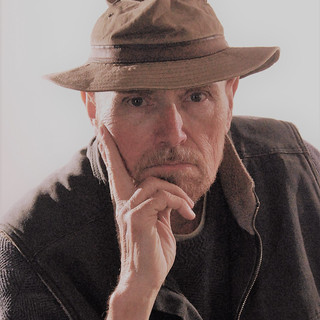
What does it mean to be an Art Monster?
Warm up the hate mail machine — I'm a man, and I appropriated Lauren Elkin's Art Monsters: Unruly Bodies in Feminist Art. Excellent read, by the way. I picked it up about a year ago. Despite being a man, I saw some of the Art Monster in myself. It's a feminist text, but much of the humanity in it applies to we men artists too — that is, if men are being honest about it. And my wife Doris informs me: honesty about our own motives has never exactly been my strong suit, she keeps me grounded.

For anyone who hasn't read it: Elkin's Art Monster is the artist who won't let family, marriage, or caretaking come before the work. Good examples I’ve read about include Berthe Morisot painted alongside Manet and the Impressionists. She faced expectations in a time when women artists were expected to stay amateurs. Joan Mitchell built an Abstract Expressionist career on her own terms, in a the NYC art scene that didn't make room for her easily at all. Grace Hartigan gave up custody of her son to keep painting — a decision most artists, men or women, would find agonizing. That decision, most of us who value family as much as our work would probably never make. Art history however is strewn with men making versions of that same choice for centuries —and rarely they paid the same price for it. Henri Matisse made it plain to his wife Amélie that the work came first — by his own reckoning, she came in third — and it eventually cost him the marriage ( told my wife my art came first once…I couldn’t pull it off).
All of us artists face expectations. I'd never pretend the expectations I face come anywhere close to what women in the art world still are up against. Nonetheless, society, and how each of us sees ourselves within our family, our community, or the art groups we join, forces us to examine the dynamics of those situations and decide how we fit in. Can we fit in? Should we even conform to what that group expects of us? Usually these expectations aren't said out loud — they're communicated through subtle actions, choices of words, the phrases people use within the group.
Somewhere while reading Elkin, I started asking myself whether I was an Art Monster. For me, it means pushing against expectations and looking for new ways to view the world around me. Reading artist biographies, art history, and studying philosophers who write about aesthetics — that's what informs how I see my place in the world.
Getting too comfortable
Lately, my work has all begun to look too comfortable. New paintings look great, but then I start to see too much of the older work in them. The similarity has started to make me look for change. And when we artists face change, it's like anything else — humans resist it.
I used to think I never stuck with a technique long enough before jumping to the next one. Almost every painting was an experiment, or at least the blocking-in stage was an experiment in technique and materials. I still start every painting differently. That goes against the expectation I might have for myself: “learn to develop a painting the same way every time, and the results will be better because of the consistency.”
No!!! I will shout it from the rooftops — No!!! Don't do that. STOP!
Becoming the Art Monster
Here's what I've come to believe, for myself at least. If I'm not continually trying new techniques and examining what each painting does or fails to do, I'm not growing. To do that, I have to challenge my own expectations — that's what becoming an Art Monster means to me.
Every artist, if we are honest with ourselves, has expectations placed on them — by family, by society, by whatever community they belong to. It shouldn't matter whether you're a man or a woman — we should just be creating art. But until we break the expectations others place on us, we're not free to just make art. And once we're making it, we have to then identify and break our own expectations too.
I'm not saying anyone needs to go as far as Hartigan did, or as far as Matisse did to Amélie. That's the far end of it, and it cost both of them something real. But somewhere between painting it safe and painting like nothing else matters, there's a place each of us has to find for ourselves. The question isn't whether you go that far — it's whether you're honest with yourself about how far you're willing to go.
So, are you an Art Monster?
Here's where I'd start — not a checklist of what you should be, just a mirror for where you might still be pulling punches.
You're happy painting exactly the same way, just wishing your art looked different.
You hesitate to add a bright color or object because others might find it too bright, too out of place.
You think about what others will think of the painting before it's even finished.
You stop yourself from doing some things, and do others, because of what people might think.
You mow the yard or knock out chores around the house first, and only make art if there's time left over.
Your studio looks like a small art store — but half of what you bought is still unopened.
I think we can all find something on this list that proves we're not fully Art Monsters yet. All we have to do now, is to think differently. Maybe, make our own list of what will turn us into the Art Monster we want to become.
If any of this gets you thinking, I suggest you go read Elkin's Art Monsters: Unruly Bodies in Feminist Art — she says all of this better, and says a lot more besides.
Good luck, and happy painting.


Comments